
Clay Remembers First
On matkas, earthen pots, and the patience of things shaped from soil

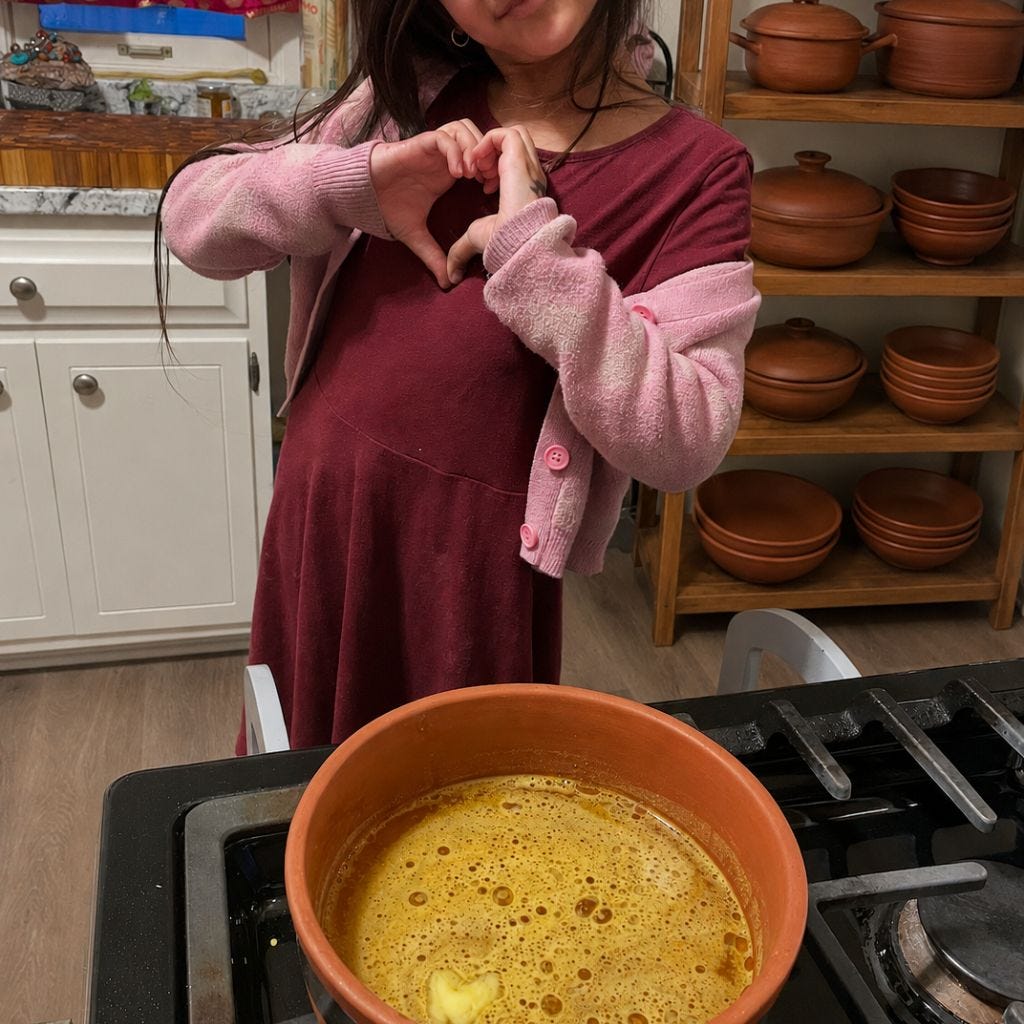
There is a particular kind of thirst that only a matka understands.
Not the polite thirst of a glass filled from a refrigerator, cold enough to shock the teeth and erase its own character. I mean summer thirst. Dust-on-the-throat thirst. Afternoon thirst. The kind that gathers behind the tongue when the house has gone quiet, the curtains are tired, and even the ceiling fan seems to be negotiating with God.
A matka does not answer this thirst with drama. It does not clatter, beep, dispense, filter, or announce that it has improved your hydration experience.
It simply cools.
Quietly.
Like someone who has no interest in being modern because it has already survived civilisation.
The water from a matka carries something the refrigerator never learned to imitate. A softness. A roundness. A faint earthen whisper, as though the water has passed through memory before reaching the glass. It is not merely cold. It is cooled.
There is a difference.
Cold can be imposed. Coolness is cultivated.
That, perhaps, is clay’s first lesson.
Not slowness as laziness. Not fragility as weakness. Not oldness as decorative nostalgia. Clay teaches the patience of transformation that does not need to announce itself every three minutes with a digital chime. It works by contact, by breath, by porosity, by the old friendship between earth and water.
A matka does not cool water by force. It cools by breathing. Through its porous walls, a little water slowly escapes into air. Evaporation does its ancient work. The vessel sweats, the water settles, and what returns to the hand is not the sharp shock of refrigeration, but something gentler.
Coolness with manners.
And manners, in a kitchen, should never be underestimated.
There is old wisdom, too, around water that has been allowed to rest. Running water has its own life. It moves, rushes, strikes, escapes, carries, cleanses. But water that has sat quietly in clay seems to enter the body differently. I say this carefully, not as a laboratory claim, but as inherited observation. Our ancestors may not have used modern scientific language for every instinct, but they watched the behaviour of water, vessel, season, and body with astonishing precision.
They understood that not all water feels the same.
Water drawn fresh and swallowed in haste is one thing. Water that has rested overnight in an earthen vessel is another. It has settled. It has cooled without violence. It has lost some of its agitation. It arrives not like a command, but like a quiet guest.
Perhaps that is why matka water can feel almost meditative. Not because it performs some mystical spectacle, but because it has been still before entering us.
And there is something to be said for receiving what has first learned to rest.
This is where clay begins to reveal that it was never merely ornamental. Our elders did not keep clay close only because it looked rustic beside a marigold garland and made everyone feel briefly ancestral. Clay was cherished because it did something.
It cooled, absorbed, breathed, moderated, participated.
The old language may not always have been the language of minerals, ions, alkalinity, porosity, or pH, but the observation was exact. Clay had a way of softening water, rounding sharpness, keeping certain things fresh, encouraging others to mature, and giving food a different relationship with time.
That is not nostalgia.
That is material intelligence.
And this wisdom was never India’s alone.
Clay has travelled with humanity from the beginning, though perhaps travelled is the wrong word for something that usually waits under our feet until a hand knows what to do with it.
Wherever people have been hungry, thirsty, cold, hot, hurried, patient, prayerful, practical, or simply trying to make dinner before someone starts complaining, clay has been there.
In one place, it cools water. In another, it carries beans slowly toward softness. Somewhere else, it receives chocolate, stew, grain, milk, broth, tea, or whatever the household has learned to trust to earth and fire. Across Africa, Mexico, the Mediterranean, the Middle East, East Asia, and the Americas, people have shaped clay into vessels not because it was quaint, but because it answered the oldest domestic questions beautifully.
How do we keep water cool?
How do we soften what is hard?
How do we let something ripen without spoiling?
How do we cook without scorching?
How do we make the ordinary act of feeding ourselves feel less like survival and more like belonging?
This matters because clay is not a regional mood or a heritage prop. It is one of humanity’s oldest agreements with earth.
India has its own language for that agreement, of course. Naturally we do. We have never encountered a useful thing without giving it family, ritual, argument, and at least three regional opinions.
But the deeper wisdom is shared.
Long before modern kitchens began arranging themselves around speed, shine, and wipe-clean surfaces, human beings everywhere understood something very simple.
Earth could be shaped.
Fire could strengthen it.
Water could rest inside it.
Food could be given the one thing modern kitchens are always negotiating with, time.
And some materials, no matter how humble, know how to stay close to life.
In the Indian kitchen, clay has always known how to remain near life without asking for applause.
It is there in the matka by the wall. In the kulhad of chai that smells faintly of rain before the first sip. In the little diya lit at dusk, holding flame with the seriousness of a small priest.
And then, in two very different corners of the kitchen, clay shows us something even more astonishing.
With curd, clay becomes gentle.
It receives warm milk and culture and lets them settle into something sweet, tender, and alive. A good earthen pot of curd does not taste bullied into existence. It tastes rested. Soft. Clean. As though the milk was allowed to become itself without being rushed by a machine that, however useful, still insists on announcing completion with unnecessary confidence.
Pickle asks something else entirely.
Pickle does not want softness. Pickle wants time, salt, oil, spice, sun, shade, and a certain amount of family-level drama. Mango, lemon, chilli, mustard, fenugreek, turmeric, and oil must sit together long enough to stop being individual ingredients and become a small, sharp, magnificent government of their own.
Clay understands both.
It can keep curd tasting sweet and fresh. It can let pickle darken, deepen, and gather authority in a corner.
Where does one find such instinctive wisdom?
Some things must be protected in their tenderness. Some things must be allowed to mature into intensity. Clay seems to know the difference.
Yes, we have yoghurt settings now. We have appliances that beep at us with great self-esteem. And thank goodness. Many of us have been saved by a machine at 7 p.m. when the day has gone feral and everyone is hungry in a tone of voice that feels legally actionable.
I am not here to shame the Instant Pot.
The Instant Pot has done seva.
But an appliance follows instruction.
Clay enters relationship.
It does not simply produce a result. It participates in the conditions around the result. Air, moisture, temperature, milk, culture, salt, spice, sun, shade, time. Clay seems to understand that food is not only made. It is kept in an environment until it becomes itself.
That is the part I do not want us to lose.
Not because every person must now become a full-time custodian of earthenware. Who has the shelf space? Who has the emotional capacity? Some days the greatest spiritual achievement is simply finding the matching lid.
But perhaps one clay thing can return.
One matka. One curd pot. One little diya. One earthen cup of tea when life offers it. One pickle jar sitting with the stern patience of an elder who knows the calendar better than everyone else.
Not to prove anything. Not to perform heritage. Only to remember that some materials do not merely serve the kitchen.
They steady it.
And perhaps that is clay’s deepest offering. It does not ask us to abandon the modern kitchen. It does not stand there, dusty and noble, silently judging the blender. Clay has better manners than that.
It simply reminds us that food does not always become itself through force.
Some things need to rest. Some need to cool. Some need to sour gently. Some need to ripen in their own dark patience. Some need the slow confidence of a vessel that does not mistake urgency for importance.
Clay teaches this without drama most of the time.
But let us not pretend clay is incapable of theatrical timing.
Introduce sudden heat, impatience, or the overconfidence of a novice cook trying to impress guests, and clay may reward the performance with a sharp little crack in the middle of cooking.
I have learnt this the hard way.
There I was, full of intention, hospitality, and unnecessary self-belief, imagining myself very ancestral and impressive. The guests were waiting. The kitchen was fragrant. The mood was promising. And then clay, having apparently reviewed my technique and found it lacking, chose that exact moment to make its objection known.
A crack.
A leak.
A small domestic siyapa.
Phitte muh, as one might say to oneself, while trying to look calm and spiritually evolved.
This, too, is clay’s teaching.
Not every vessel is impressed by our enthusiasm. Some ask for preparation. Some ask to be soaked, warmed, handled, and approached with humility before being entrusted with dinner and public reputation.
Clay does not punish.
It corrects.
Unfortunately, sometimes it corrects in front of people.
But clay has never been interested in entertainment for its own sake. It belongs to the older school of usefulness, the kind that does not announce itself until one day you drink water from a matka, taste curd set in earth, open a jar of pickle that has been quietly conspiring with time, and realise that some wisdom was never lost.
It was only waiting in the corner. Near the wall. Under a lid. Beside the sunlight. In the part of the kitchen we stopped noticing because it was not loud enough to compete.
And maybe that is the mercy of clay. It does not demand our complete return. It only asks that we remember how to recognise what is alive in old things.
One earthen cup of chai that tastes faintly of rain. One lamp lit at dusk. One vessel that reminds the hand that soil is not far from us.
This is not a commandment. It is an invitation. A small one, which may be the only kind that lasts.
Because the Indian kitchen, at its wisest, has never been built only from grand declarations. It has been built from small returns. A spoon set aside. A spice kept whole. A vessel not discarded. A recipe remembered imperfectly, then tried again. A child told, “taste this,” before being old enough to understand that inheritance often enters through the mouth before it reaches the mind.
Clay begins that inheritance close to the earth.
It steadies the kitchen. It cools what has been heated by the day. It receives what needs tenderness. It gives patience a shape we can touch.
But not every hunger asks for gentleness.
Some foods want a firmer answer. Some batters want a hot surface and no sentimental hesitation. Some rotis must meet a tawa that has earned its authority. Some vegetables need contact, sear, smoke, and the kind of heat that does not whisper so much as look you directly in the eye.
Clay remembers first.
But somewhere nearby, darkened by oil, flame, and years of loyal service, iron is waiting.
And iron, unlike clay, does not merely remember.
Iron answers back.
Once our migration northward is complete, I now plan to invest in a few clay cups so we may savor chai that tastes faintly of rain. <3
(Will use your chai recipe too!)
=====
A few parts that worked particularly well for me as your delighted reader:
"The kind that gathers behind the tongue when the house has gone quiet, the curtains are tired, and even the ceiling fan seems to be negotiating with God."
More poetry.
"And there is something to be said for receiving what has first learned to rest."
More wisdom.
"Clay is not a regional mood or a heritage prop. It is one of humanity’s oldest agreements with earth."
And more.
Earthen pots are very beneficial for our health