
Before Balance Returns

There was a season of my life when I could not hold Vrikshasana.
Tree Pose, on paper, appears rather straightforward. One foot rooted. The other placed against the standing leg. Hands together. Breathe. Stand there looking serene and vaguely enlightened.
I was decidedly less enlightened.
I wobbled. I tipped. I fell out of it with remarkable consistency.
And because I was often the only Indian in an otherwise entirely white yoga class, I had the distinct and wholly irrational sensation that every wobble was being carefully observed. No one was actually staring, of course, but there is something about being visibly different in a room that occasionally makes one feel as though one has landed on Earth in a pretzel and everyone is quietly waiting to see whether one can untangle oneself correctly.
At first, I found this mildly irritating. I had returned to yoga seeking steadiness and instead found myself repeatedly deposited back onto the mat by a pose that children seem to perform with little difficulty and trees, quite frankly, have been performing all their lives.
Bodies, however, are truthful things.
Long before language catches up, long before we have gathered enough courage to articulate what is wrong, the body often knows.
Mine certainly did.
Standing on one foot made me feel unexpectedly vulnerable and almost fragile. It was as though my body had convened a meeting without informing me and had arrived at several uncomfortable conclusions.
I was tired.
I was diminished.
I was carrying more than I had admitted.
And somewhere beneath all of that, I had become estranged from myself.
I did not understand it fully then. I only knew that I could no longer balance.
The body had spoken.
I simply had not yet learned how to listen.
I had emerged from a long season that no longer fit.
Not all at once and not dramatically. The way difficult seasons usually unfold, it had happened quietly and incrementally, like watching daylight leave a room. You hardly notice it at first, and then one day you look up and wonder when everything became so dim.
Confidence had thinned. Joy had become difficult to locate.
I had stopped painting.
Cooking, once a source of immense comfort and pleasure, had become strangely transactional. One still has to eat, after all, even while one’s spirit appears to be on an extended leave of absence.
I avoided gatherings because I had grown weary of explaining myself and wearier still of being asked questions I did not know how to answer.
I had begun making myself smaller.
I occupied less space. I wanted less. I expected less. I laughed less.
I had become, in ways both visible and invisible, a quieter and considerably dimmer version of myself.
Some things in life are allotted to us and some we are simply lotted into. That season was one of them.
I could not have named it as a lesson then.
Lessons are rarely obliging enough to identify themselves while they are underway.
Mostly, they arrive disguised as ordinary life.
While all of this was unfolding several shores away, life carrying on in its quiet, incremental way, my mother died.
Even now, I find that sentence startling in its simplicity.
There was no grand announcement. No warning bells. No dramatic weather. One ordinary day she was there, and then she was not.
She would call from halfway across the world, the phone ringing insistently at odd hours because time zones have always considered themselves above manners.
Her calls always had a familiar ring to them, carrying an enthusiasm and eagerness that somehow travelled effortlessly across an invisible line. Without even looking at the screen, I could always tell it was her. I could feel her longing to talk, to share, to hear about my life and fold herself into it from halfway across the world.
She asked about the future in the way mothers often do, with equal parts curiosity and certainty.
Had I been eating properly?
Was I sleeping enough?
When was I coming home?
And then, invariably, some version of...
“What next?”
I became rather adept at answering in possibilities.
Perhaps one day.
Let’s see.
God willing.
Soon.
Mostly, I did not know.
I was hurting.
And I did not know how to explain that I felt I had somehow misplaced myself.
And then the phone stopped ringing.
Entirely.
My mother’s death shattered something in me with a deafening force.
Grief has a way of rearranging our relationship with time. It exposes how much of life we postpone, how many conversations, dreams, and versions of ourselves we quietly place on a shelf marked someday.
I think it made me less willing to negotiate with later.
Later is perhaps the most dangerous word we speak to ourselves.
Later, I realised, is not a promise.
It is a gamble.
What followed were not grand reinventions.
There was no dramatic declaration.
No sudden clarity.
No cinematic montage set to inspirational music.
Grief, after all, is not particularly interested in our plans for self-improvement.
There were, instead, small and deeply ordinary acts of return.
I rebuilt my fractured credit and worked with a quiet determination that surprised even me. There is something profoundly reassuring about receiving a regular pay cheque when one’s inner life resembles a room after an enthusiastic burglary.
The work itself was not the point.
It gave me evidence.
Evidence that I could show up.
Evidence that I could be relied upon.
Evidence that perhaps I was not nearly as broken as I had feared.
This may not sound especially poetic, but there is something deeply restorative about paying one’s bills on time after a season in which even getting out of bed occasionally felt like an ambitious undertaking.
Healing, I discovered, does not always announce itself in grand revelations. Sometimes it arrives disguised as competence. Sometimes as routine. Sometimes as the deeply unglamorous act of putting one small piece of one’s life back in order and then another, and then another.
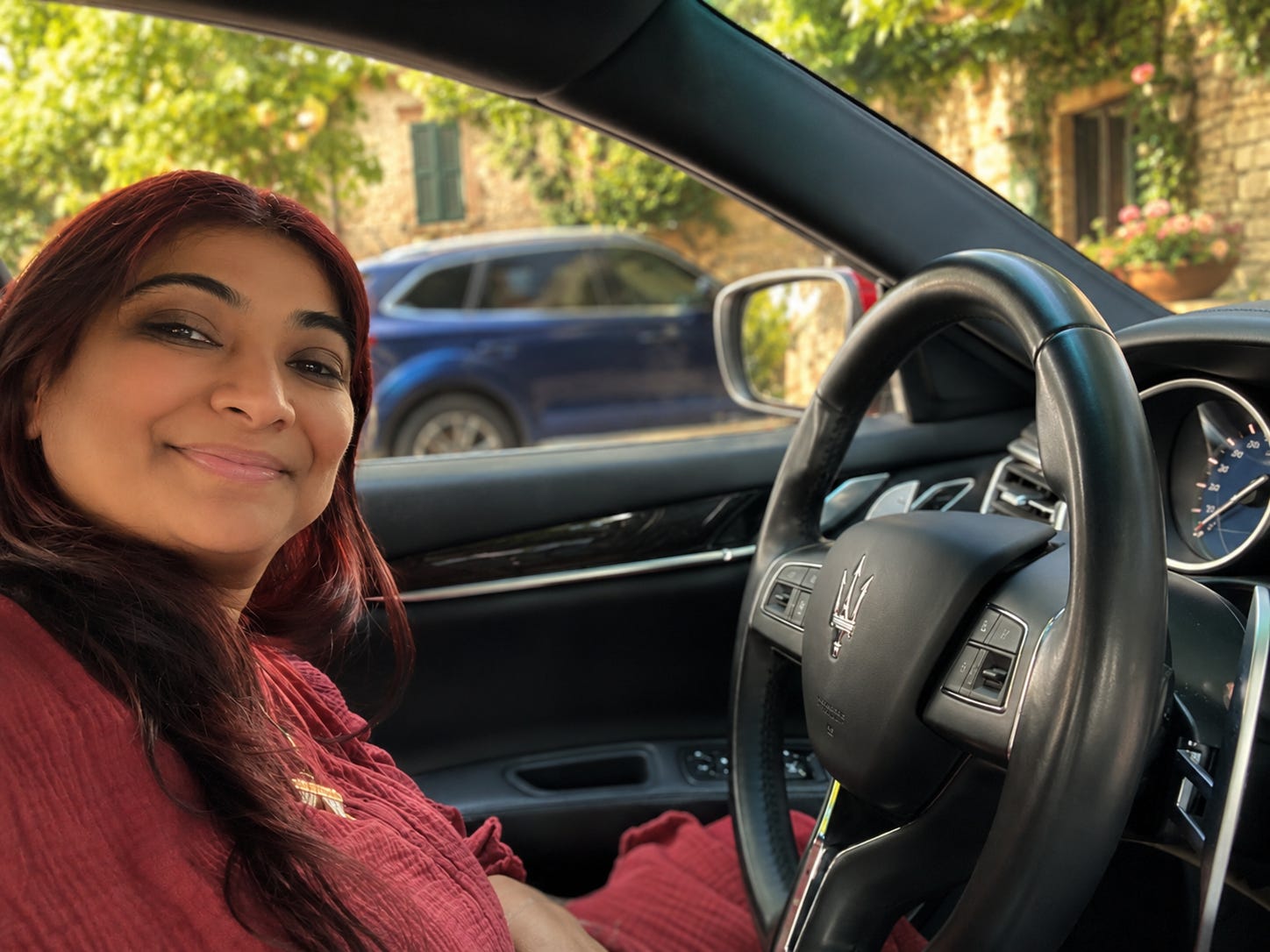
And thus came my little burgundy two-door coupé, and I named her Sassy.
To this day, all my cars have had names, and I am offering neither explanation nor apology for my decisions.
I have always maintained a deep affection for fine automobiles. Some people admire jewellery. I admire a well-designed machine that starts reliably and carries itself with a certain feminine grace. Practicality is improved considerably when it arrives with good lines.
Sassy was not extravagant.
Nor was she entirely practical.
She was something far more important.
She was evidence.
Evidence that I still possessed preferences.
That delight had not altogether abandoned me.
That some quietly mischievous part of my spirit still wished to choose beauty where possible and name it when it arrived.
I remember sitting behind the wheel and feeling something I had not felt in quite some time.
Possibility.
I was still uncertain.
Still healing.
Still very much a work in progress.
But I was moving.
And sometimes movement is all faith asks of us.
The first meal I remember slowing down to prepare, savour, and then finally eat again, as though I had all the time in the world and nowhere more important to be, was a humble plate of rajma and rice.
Nothing elaborate.
No culinary revelation.
No ancestral chorus singing in approval.
Just beans, rice, and the curious sensation that appetite had returned not merely to my stomach but to my life.
I remember taking a few bites and thinking:
Ah.
There you are.
I had not found myself.
I distrust that phrase.
I had simply found evidence.
And for that season of my life, evidence was more than enough.
I returned to yoga.
I returned to dance.
I returned, somewhat tentatively, to the possibility of meeting new people and discovered, to my slight bewilderment, that human connection now appeared to involve profiles, photographs, and an alarming amount of swiping.
I had come of age in an entirely different era.
This all felt vaguely suspicious.
And mildly ridiculous.
I remember thinking that if someone had described this arrangement to my younger self, I would have assumed they were making it up and suspiciously asked whether I was on Candid Camera or in an episode of The Twilight Zone.
Apparently one now met prospective companions by making split-second decisions with one’s thumb.
Civilisation, it seemed, had taken some very interesting turns.
I briefly considered allowing well-meaning friends to orchestrate matters on my behalf, but something in me resisted.
Perhaps it was a quiet instinct for self-preservation.
Perhaps it was the simple desire to trust myself again.
Perhaps it was something quieter.
I wanted my choices back.
I wanted authorship.
If I was going to stumble, I wished to be entirely responsible for the stumble.
And if I was fortunate enough to get back up again, I wanted that effort to belong entirely to me as well.
It was, I realise now, another act of trust.
Not confidence.
Certainly not certainty.
Trust.
And then there was a man who drove four hours in an ageing, temperamental truck he affectionately called Hog simply to have a cup of coffee with me, before climbing back in and driving the same four hours home again through traffic.
Life, I have learned, occasionally returns us to ourselves through means we could never have orchestrated.
It has a mischievous habit of placing extraordinary things inside entirely ordinary afternoons.
Yet, of all the things that returned me to myself, it was Tree Pose that taught me the lesson most clearly.
Not because I eventually held it.
But because I couldn’t.
There is a peculiar honesty to Vrikshasana.
It asks nothing extravagant of us.
Simply stand.
Root one foot.
Lift the other.
Breathe.
Trees have managed this arrangement for centuries.
I, meanwhile, found it unexpectedly ambitious.
I was tired.
I was carrying more than I had admitted.
My breaths had become short and economical, as though air itself required rationing.
I was entirely responsible for the stewardship of this one life.
The realisation felt lonely.
And strangely liberating.
No one could stand in Tree Pose for me.
No one could reclaim my balance for me.
No one could breathe fully on my behalf.
I could see what was fractured.
And somehow, seeing it clearly made me believe I might be able to put it back together.
Only later did I realise that I was grieving more than my mother’s passing.
I was grieving versions of myself that had quietly disappeared.
The woman who painted without reason.
The woman who cooked with delight rather than obligation.
The woman who laughed easily and occupied her own life without apology.
Perhaps that is grace.
Not the absence of difficulty, but the ability to look honestly at our broken places and still imagine the possibility of repair.
I do not remember exactly when I finally held Vrikshasana.
I remember only that one day, after many attempts and a good deal of wobbling, I remained there.
One foot rooted.
The other lifted.
Breathing.
Not perfectly.
Certainly not gracefully.
But long enough.
And then I collapsed onto the floor and sobbed.
It seemed, even to me, an inordinate amount of emotion to expend over standing on one foot.
Yet there I was.
Weeping.
Not because balance had been mastered.
And certainly not because life had suddenly become easy.
I think I was crying because something in me had returned.
Or perhaps more accurately, something in me had remembered itself.
Because this essay isn’t about resilience.
It’s about reverence.
Reverence for the body that keeps score and somehow finds its way back.
Reverence for the seasons that humble us.
Reverence for the people who leave us and continue shaping our becoming long after the phone no longer rings at impossible hours.
Reverence for the uncertain stretches of life that appear to be undoing us while quietly preparing us for another chapter.
And above all, thankfulness.
Thankfulness for all the visible and invisible graces that held me while I was learning to hold myself again.
I find myself standing at the edge of another chapter, drawn toward a place that feels strangely familiar to me, though its language is not yet mine.
I do not fully understand this affinity.
I only know that something in the spirit of Italy feels recognisable.
The meals.
The resilience.
The stubborn insistence upon beauty, even on ordinary Tuesdays.
The way families gather.
The way a table somehow keeps finding room for one more chair, and strangers are gradually folded into belonging.
The understanding that life can be bureaucratically inconvenient and still deeply worth living.
It feels less like discovering a place and more like remembering one.
As though some quietly wandering part of me arrived there long ago and simply neglected to mention it.
The body and I have met here before.
And while I would prefer that it communicate with less subtlety and perhaps provide written instructions, I understand what it is trying to tell me.
Pay attention.
Something is changing.
Again.
I wish I could tell you that I have held Vrikshasana flawlessly ever since.
I have not.
Balance, I have discovered, is a somewhat nomadic creature.
It arrives.
It settles in.
It becomes comfortable.
And then, often without warning, it wanders off again.
Every so often, life places us back in Tree Pose.
One foot rooted.
The other lifted.
Asked once again to place our weight upon a future we cannot yet prove.
Perhaps this is all any of us are ever doing.
Practicing balance.
Practicing trust.
Practicing belonging.
Thanking all the visible and invisible graces that carry us while we wobble.
Trees make the whole business look deceptively simple.
The rest of us simply do our best.
One foot rooted.
One foot lifted.
Unsure still.
And making a move in the right direction.
- "No one could stand in Tree Pose for me. No one could reclaim my balance for me. No one could breathe fully on my behalf."
And that is why, my dear, loving ourselves is so vital. There are some things we can only do for ourselves, and we may only feel inclined to do when love is present.
- "Perhaps that is grace [...] the ability to look honestly at our broken places and still imagine the possibility of repair."
I'm carrying this description of grace with me for awhile, to see how it suits as a personal definition. I suspect it will serve admirably.
- "Balance, I have discovered, is a somewhat nomadic creature."
For my life, this explains a lot! Thanks.